Rumble Strips vs Speed Bumps: How to Tell Them Apart
Rumble strips warn with sound and vibration; speed bumps and speed humps change the vehicle's path so the driver must slow down. That difference is the quickest way to answer a DMV question or decide what a road feature is asking you to do.
Quick answer
A rumble strip is a narrow textured treatment that draws attention to lane position or an approaching change. A speed bump is a short, raised obstacle for very low-speed areas. A speed hump is longer and flatter, so it reduces speed more gradually. None of the three replaces signs, markings, or attentive driving.

Rumble Strips vs Speed Bumps at a Glance
The names sound similar because all three disturb the ride. Their purpose, placement, and expected response are different. Use the table as a study map, then read the details below before relying on a feature alone.
| Feature | Rumble strips | Speed bumps | Speed humps |
|---|---|---|---|
| Main job | Alert a drifting or inattentive driver | Force a very low-speed crossing | Reduce speed with a gradual rise |
| Physical shape | Narrow grooves or raised texture | Short, abrupt raised profile | Longer, smoother raised profile |
| Common setting | Highway shoulder, centerline, or lane approach | Parking lots and very low-speed areas | Residential streets, school areas, or traffic-calming zones |
| Driver cue | Hear and feel it, then check position | Brake before the raised feature | Reduce speed smoothly before the rise |
What Do Rumble Strips Do?
Rumble strips are milled grooves, raised patterns, or related textured treatments in pavement. When tires cross them, the surface creates a rumbling sound and vibration through the steering wheel, seat, and vehicle body. That feedback is useful when a driver is tired, distracted, dealing with glare, or drifting without realizing it.
Placement gives the warning meaning. Shoulder or edge-line rumble strips signal possible movement toward the roadside. Centerline rumble strips warn of movement toward opposing traffic. Transverse strips cross a lane and may draw attention to a work zone, curve, intersection, signal, or other change ahead. The treatment is a cue to look and reassess, not a command to stop or swerve.
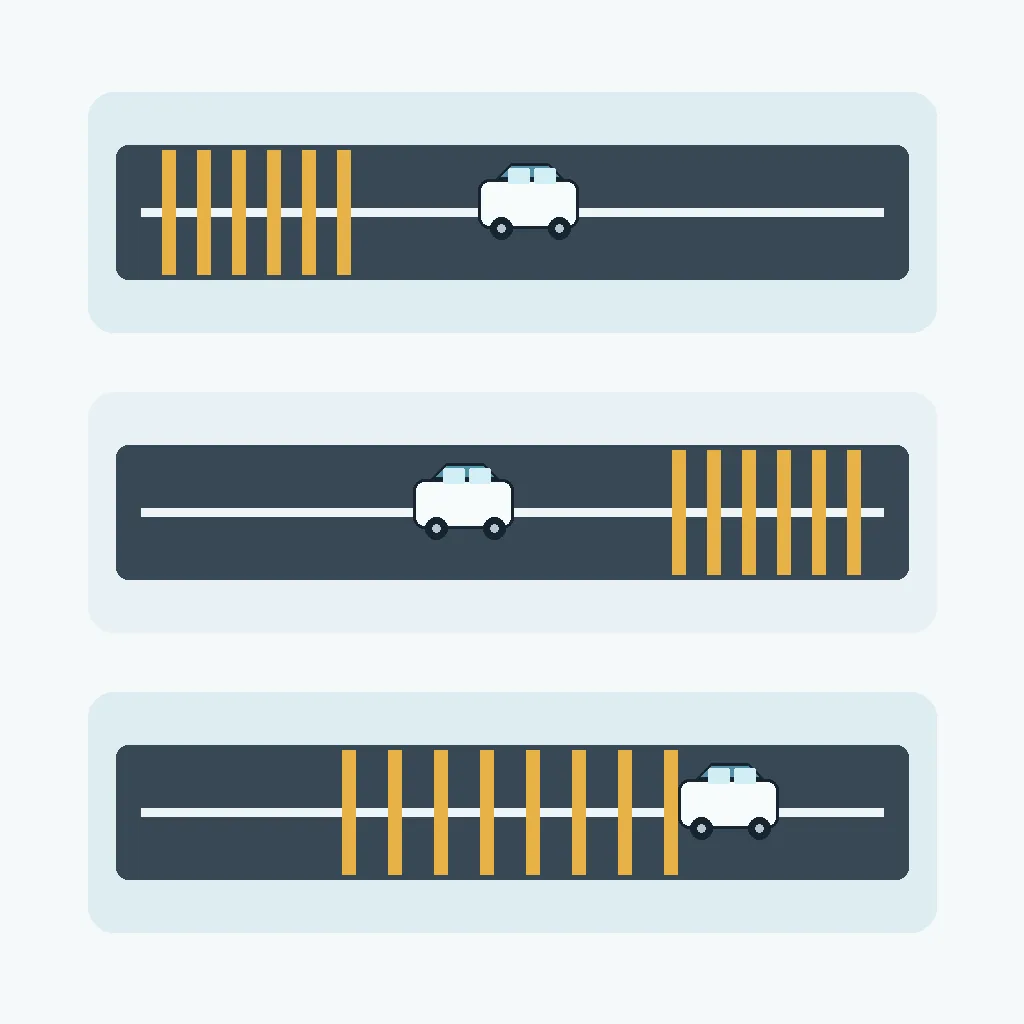
Federal Highway Administration guidance describes rumble strips as a countermeasure for driver error. It also notes practical design concerns such as bicyclist access, pavement condition, adjacent noise, and turning movements. Those details explain why a road agency may leave gaps or choose a different pattern. They do not change the basic DMV study point: sound and vibration are an alert channel.
How Speed Bumps and Speed Humps Control Speed
A speed bump is a short, steep rise. It is normally used where traffic should already be moving very slowly, such as a parking lot or private access lane. Crossing it too fast produces a sharp jolt, so the driver is expected to brake before reaching it. A speed hump is wider and flatter. It still changes the vehicle's vertical movement, but it is intended to lower speed more gradually on a public street or other traffic-calming approach.
Because bumps and humps physically alter the lane, look for advance signs, pavement markings, a broad raised shape, and a setting where pedestrians or local traffic are expected. Do not use a rumble-strip response for a raised feature. If you see a speed warning, reduce speed smoothly before the rise and keep a safe following distance.
Source boundary
Exact dimensions, colors, and placement rules vary by agency and project. The FHWA rumble-strip design guidance supports the rumble-strip purpose and placement statements here. Check the current driver handbook for state-specific wording.
How to Identify the Road Feature
When a question or a real roadway scene is confusing, use four checks instead of guessing from the noise:
- Check the width. A narrow band near a line is more likely to be a rumble strip. A broad raised section across the lane is more likely a bump or hump.
- Check the position. Edge and centerline placement point to lane-departure warnings. A feature centered across the lane points to a speed-control or transition treatment.
- Check the setting. High-speed divided roads commonly use shoulder strips; parking lots commonly use bumps; neighborhood or school approaches may use humps.
- Check the instruction. Read the sign and pavement marking. The visual message controls the legal maneuver, even when the surface feels similar.
These checks also prevent a common mistake: assuming that every repeated bump is a rumble strip. A bridge joint, rough pavement, lane marking, or temporary work-zone device can create a different sensation. Keep the distinction tied to purpose and placement, not just the word “rumble.”
Safe Response: What Should a Driver Do?
If you cross rumble strips unexpectedly, hold the wheel steadily and look toward the open lane. Check mirrors, the shoulder, the centerline, nearby vehicles, cyclists, pedestrians, and the next sign. Make a gentle correction when the space is clear. Adjust speed for the actual curve, work zone, weather, or posted limit; do not slam the brakes just because the vehicle vibrated.
If you approach a speed bump or hump, scan early and slow before the raised feature. Avoid following another car too closely, because its brake lights may hide the profile. Do not cross into an adjacent lane to avoid a legal traffic-calming device. If a lane is blocked or the surface is damaged, follow signs and give other road users enough space.
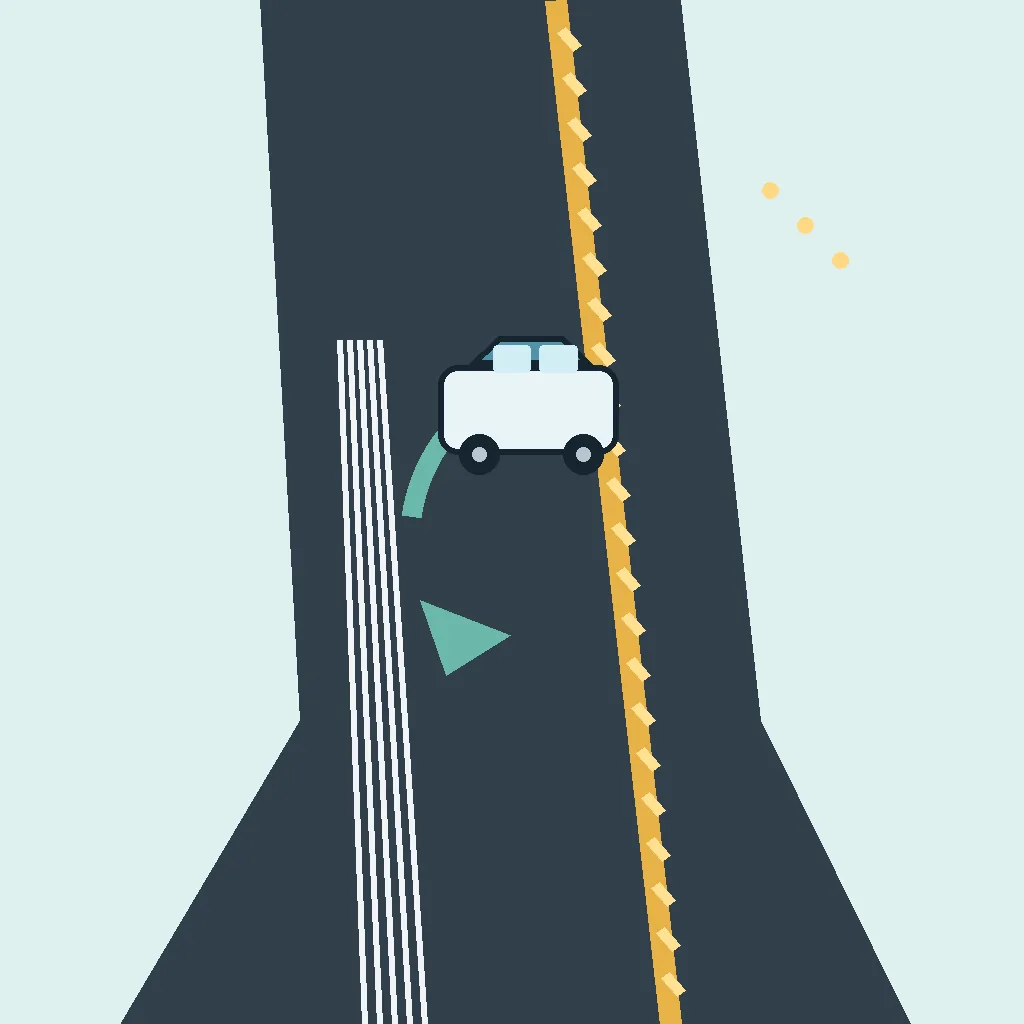
You feel vibration near the right edge line on a straight road. Check the mirror and shoulder, ease back when clear, and consider fatigue or distraction as the cause.
A sign announces a raised crossing ahead. Slow before the broad rise and watch for pedestrians; do not treat it as a lane-departure alert.
For more pavement-marking and sign practice, use the DMV road signs test. You can also review the broader rumble strips road-safety guide, read the motorcycle rumble strips safety guide, and use the traffic signs and road rules guide.
FAQ: Rumble Strips and Speed Control
Bottom Line
Remember the purpose, not just the sensation: rumble strips wake up attention, speed bumps demand a very slow crossing, and speed humps reduce speed with a broader rise. Identify the placement, read the sign, and leave room for other road users. That framework will help you answer a DMV question and make a calmer decision on the road.