Rumble Strips: Types, Purpose, and Safe Driving Tips
Rumble strips are grooves, raised patterns, or other textured treatments in the pavement that create noticeable sound and vibration when a tire crosses them. Their main job is to alert a driver who may be drifting toward a lane edge, an opposing lane, or a hazard—not to replace attention, steering control, or the rules in a current state driver handbook.
Quick answer
If you feel or hear rumble strips, stay calm, check the surrounding traffic, ease the vehicle back toward the safe part of the lane, and slow only as conditions require. Avoid a sudden jerk of the wheel or hard braking unless another immediate danger makes it necessary.

What Are Rumble Strips and How Do They Work?
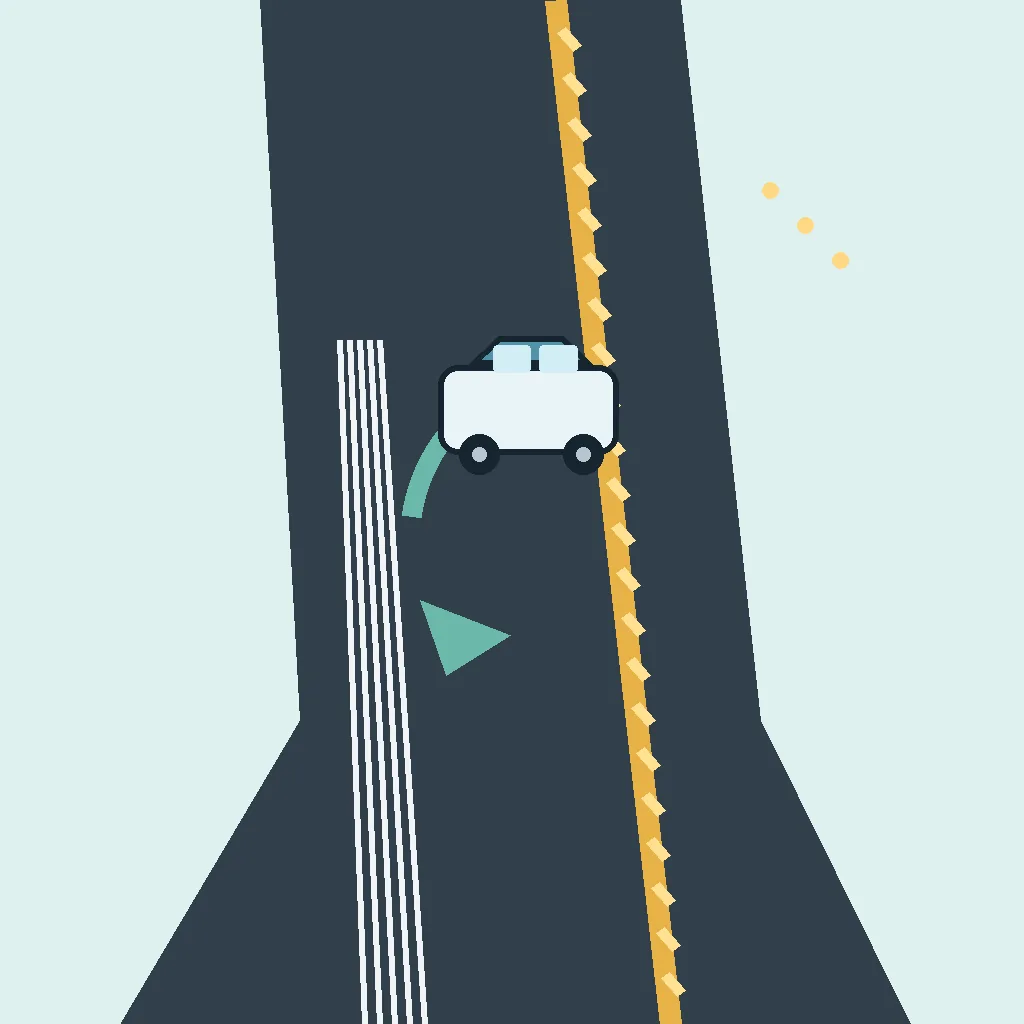
Rumble strips are a form of roadway safety treatment. Milled strips are cut into asphalt or concrete; raised or formed patterns can also change the texture of the surface. When a vehicle crosses the treatment, the tires and suspension produce a rumbling sound and a vibration through the steering wheel and vehicle body. That extra feedback can draw attention back to the road before a small lane drift becomes a more serious departure.
The word strip describes the band of textured pavement, not a painted line. A driver may see paint, reflectors, or a shoulder beside it, but the warning comes from the change in surface texture. The exact profile, spacing, color, and location depend on the road project. There is no single nationwide pattern that tells you every detail about the road or gives permission to ignore other signs.
For a learner preparing for a written exam, the useful takeaway is simple: treat the sound and vibration as a cue to reassess lane position and road conditions. The cue may be intentional, but it does not tell you by itself whether you crossed a shoulder, a centerline, or a temporary work-zone treatment. Look at the markings and the traffic situation before deciding what happened.
Rumble Strips Types: Where Are They Placed?
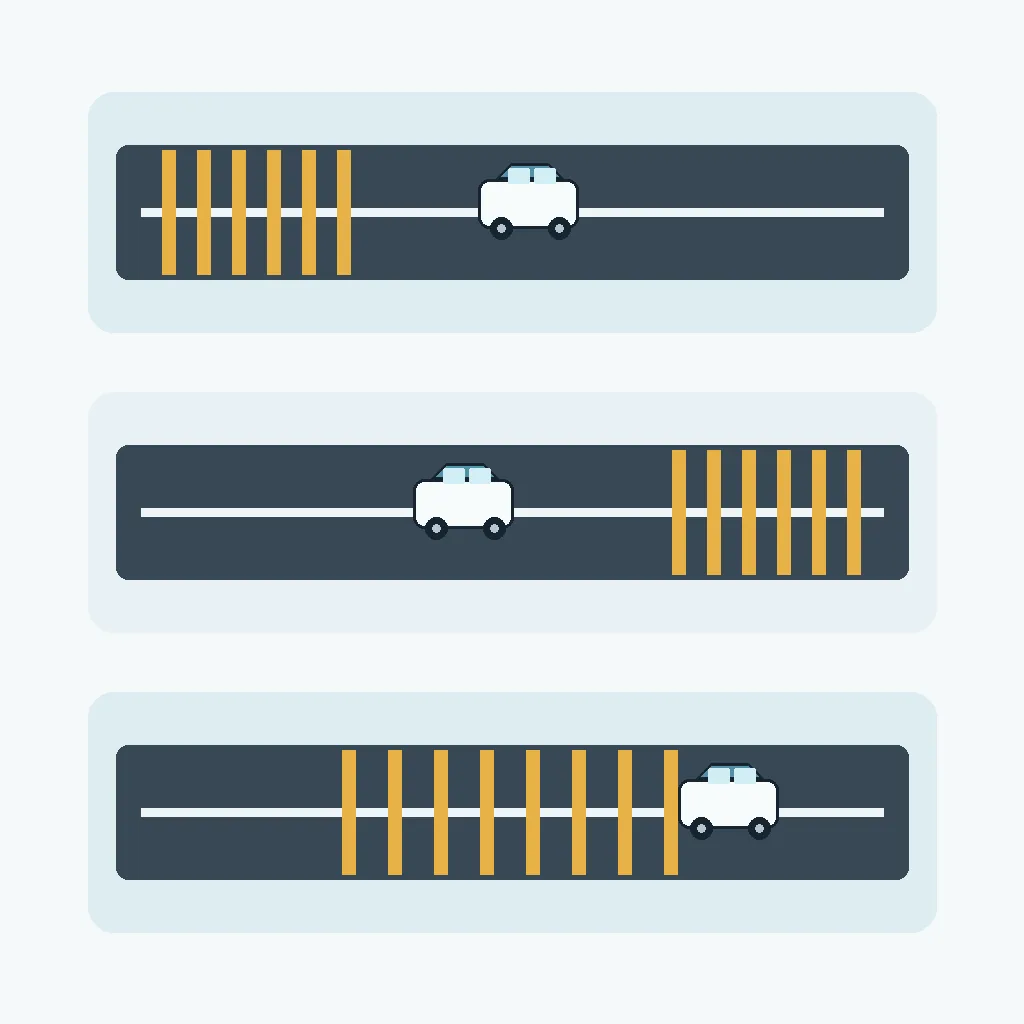
Placement is the fastest way to understand the likely safety purpose. The three categories below are useful for studying, but real road layouts can combine treatments or use local variations.
| Type | Typical location | Warning context | First driving priority |
|---|---|---|---|
| Shoulder rumble strips | Along the outside edge of a travel lane | Possible drift toward the shoulder or roadside | Regain a safe lane position smoothly after checking traffic |
| Centerline rumble strips | Near the centerline of a two-way road | Possible drift toward opposing traffic | Correct into your lane without crossing into another vehicle's path |
| Transverse rumble strips | Across some or all of a lane before a decision point | Approaching an intersection, curve, work zone, toll area, or other change | Scan ahead, check signs, and adjust speed for the posted condition |
Why Do Roads Use Rumble Strips?
Road agencies use rumble strips to provide an additional warning channel. A driver who is tired, distracted for a moment, affected by glare, or dealing with poor visibility may not notice a gradual drift immediately. Sound and vibration can prompt a correction while there is still room to recover. The treatment is therefore best understood as a secondary safety signal working with lane markings, signs, lighting, roadway geometry, and attentive driving.
- Lane-departure awareness: shoulder and centerline treatments can make an unintended crossing noticeable.
- Attention at transitions: transverse patterns may highlight a change in speed environment or road activity.
- Low-light assistance: tactile feedback does not depend on reading a sign, although drivers still need to scan for signs and markings.
- Roadway context: an installation may reflect a particular crash pattern, road design, or local project decision; it is not a universal guarantee that a hazard is immediately ahead.
Rumble strips also have limits. They can create exterior noise, may be uncomfortable for cyclists or motorcycles when placed in a travel path, and can be harder to interpret in a complex or temporary road layout. They are not a substitute for a safe speed, adequate following distance, rest, or a current official handbook. If you are studying for a permit test, focus on the response principle rather than memorizing an unsupported national percentage or one state's installation rule.
How Should a Driver Respond to Rumble Strips?
The safest response depends on why the tire crossed the textured surface and what is around the vehicle. Use this sequence as a study framework, then apply normal defensive-driving judgment:
- Hold the wheel steadily. Do not panic or make a sharp steering input just because the vehicle feels different.
- Look where you need to go. Scan the lane, mirrors, shoulder, centerline, vehicles, pedestrians, and upcoming signs.
- Ease back toward the safe lane position. Use a controlled correction and avoid drifting across another line or into traffic.
- Adjust speed when the situation calls for it. Slow smoothly for a curve, work zone, congestion, poor weather, or posted limit; do not slam the brakes without a reason.
- Find the cause after the immediate correction. Fatigue, glare, distraction, a narrow lane, a sudden maneuver, or a misunderstood road layout may require a different next step.
A common mistake is to treat every rumble as an emergency stop signal. Another is to overcorrect and swing across the lane. The goal is to restore control while preserving space. If the shoulder is soft, blocked, or occupied, do not assume it is safe simply because the rumble strips are beside it. If a vehicle, cyclist, or object is close, prioritize separation and a gradual response.
Rumble Strips vs. Other Roadway Features
Not every vibration or repeated bump is a rumble strip. Distinguishing the features helps both real-world driving and DMV question review.
| Feature | What you may notice | What to do |
|---|---|---|
| Rumble strips | Repeated sound and vibration from a textured band | Check lane position, traffic, markings, and the reason for the crossing |
| Speed hump or raised table | A broader vertical rise across the roadway | Reduce speed in advance and follow signs or right-of-way rules |
| Lane marking | Paint, reflectors, or a visual boundary with little texture | Use it as a guide; do not cross it unless the maneuver is legal and safe |
| Pavement seam or bridge joint | A localized bump, gap, or change in surface alignment | Maintain control and allow for road conditions without assuming it is a warning device |
DMV Study Points and Practical Examples
Rumble strips may appear in a question about lane departure, roadway features, safe recovery, or the difference between a warning cue and a traffic command. Connect the surface treatment to the broader rule: drivers must maintain control, stay in the proper lane, observe signs and markings, and respond to changing conditions.
You feel vibration on a straight highway and see the right edge line nearby. Check the mirror, keep the correction gentle, and return to the lane when the space is clear.
A two-way road produces a rumble near the center. Recognize possible drift toward opposing traffic and correct without cutting across the lane.
A band crosses your lane before a marked work area. Scan for the posted instruction, traffic control, workers, and the speed change instead of guessing from the vibration alone.
For more visual sign and pavement-marking practice, use the DMV road signs test. If you want the broader categories and sign shapes, review the traffic signs and road rules guide. Then return to the DMV written test practice guide to mix roadway-feature questions with right-of-way and safe-driving review.
FAQ: Rumble Strips and Road Safety
Official Sources and Scope Note
The Federal Highway Administration's rumble-strip overview is a useful starting point for the definition, safety purpose, and treatment types. The FHWA rumble-strip FAQ adds application context, while the FHWA decision-support guide is more engineering-focused. These sources do not replace the driver handbook or traffic-control instructions for a particular state or roadway.
This article is independent study content, not an official DMV publication. Road layouts and driving rules can vary. If a current state handbook or on-road instruction conflicts with a general explanation here, follow the official local source.
Bottom Line
Rumble strips are a tactile and audible lane-departure or transition warning. Remember the placement, identify the surrounding road context, correct smoothly, and keep scanning. That combination is more useful than memorizing a single phrase because it works for a written-test question and for the real decision a driver must make.
Updated September 7, 2026. Explanations are educational; current state handbooks, signs, markings, and licensing-agency instructions control.