Rumble Strips for Motorcycles: Safe Riding Tips
Rumble strips give a motorcycle rider a loud, tactile clue that the tires are crossing a textured part of the pavement. The right response is not a sudden swerve or panic stop. Read the placement, keep the motorcycle stable, check the lane and traffic, and make a measured correction only when the path is clear.
Quick answer
For a motorcycle, rumble strips are a warning surface rather than a traffic command. Shoulder and edge-line strips usually signal movement toward the road edge; centerline strips signal movement toward opposing traffic; transverse strips may announce a work zone or change ahead. Keep your line predictable, avoid abrupt braking on the texture, and follow the signs and current local rules around it.

What Rumble Strips Mean to a Motorcycle Rider
Rumble strips are milled grooves, raised elements, or another repeated texture in the pavement. A tire crossing the pattern creates vibration and an audible rumble. Highway agencies use that feedback to draw attention to a possible lane departure or a road transition. The sound is useful because it reaches a rider through the tires, foot controls, seat, and handlebars even when a glance away, fatigue, glare, or distraction has reduced awareness.
For a rider, the sensation can feel stronger than it does in a passenger car. A narrow tire follows the texture differently, and the motorcycle responds to steering input, lean angle, throttle, and braking at the same time. That does not make every strip an emergency. It means the rider should treat the warning as information: look where the motorcycle needs to go, keep the controls smooth, and identify why the tires reached the strip.
The simple interpretation
Hear and feel the texture, stabilize the motorcycle, scan the road, then correct the drift or follow the posted instruction. The strip does not tell you to brake hard, stop in the lane, or cross into another lane without checking.
Shoulder, Edge-Line, Centerline, and Transverse Placement
Location gives a rumble strip its most useful meaning. Before reacting to the vibration, identify which part of the roadway the tires touched and what traffic is near the motorcycle.
| Placement | What it may signal | Rider scan |
|---|---|---|
| Shoulder | Movement toward the outside edge or a roadway-departure risk | Shoulder width, debris, drop-off, cyclists, mirror, and open lane |
| Edge line | A tire is crossing the lane boundary near the road edge | Line position, traffic beside you, and a gradual return path |
| Centerline | Movement toward opposing traffic on a two-way road | Oncoming vehicles, passing legality, sight distance, and road surface |
| Transverse | A work zone, intersection, curve, signal, or other change ahead | Advance signs, cones, workers, speed change, and the route through the zone |
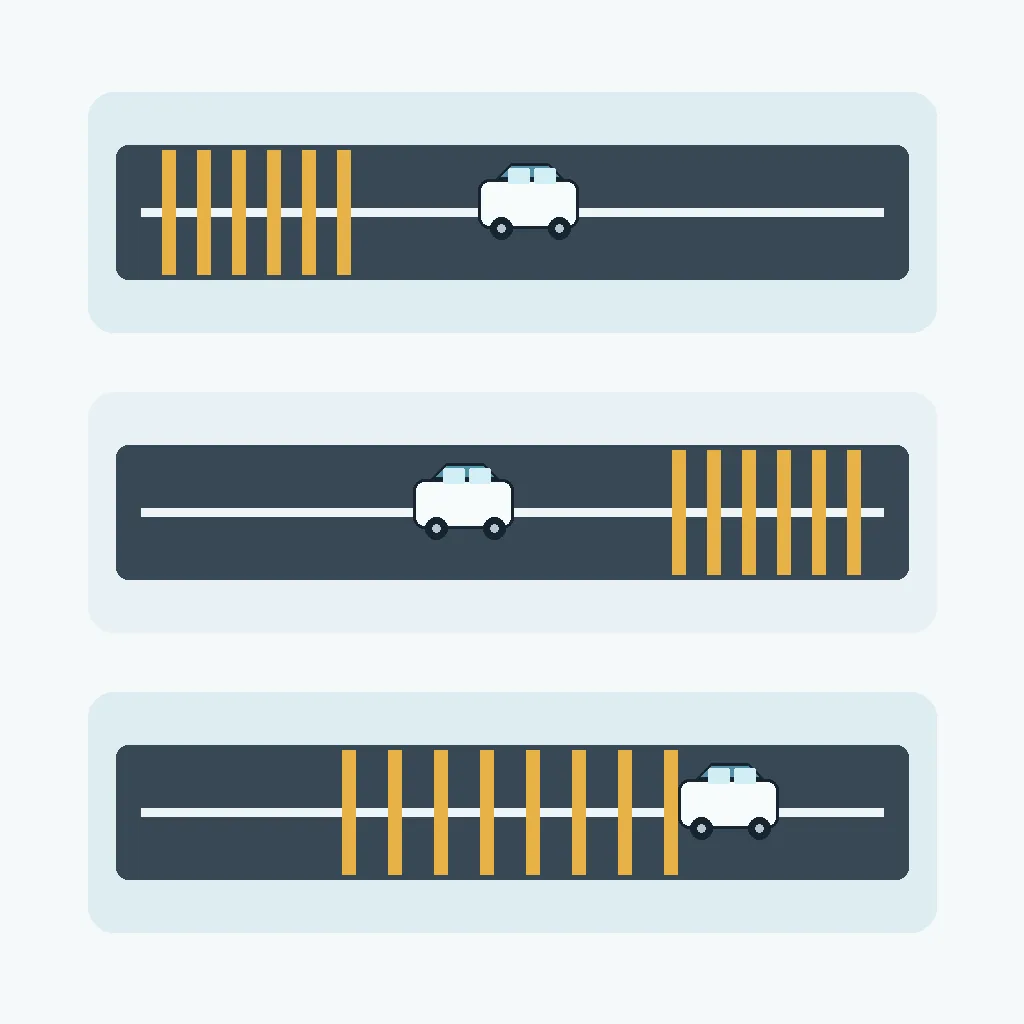
These categories are a study framework, not a promise that every project uses one identical pattern. FHWA explains that agencies choose dimensions, spacing, gaps, and offsets for the roadway, crash history, and mix of road users. A rider should therefore use the visible signs and the current local handbook to interpret a particular installation.
Why Motorcycles Feel the Surface Differently
A motorcycle has two narrow contact patches, a sensitive front wheel, and a control system that combines steering, lean, throttle, and brakes. Crossing a rough band while leaned over, braking, or accelerating can feel less settled than crossing it upright at a steady pace. Wet pavement, loose gravel, a longitudinal crack, worn milled edges, or a blocked shoulder can add a separate risk that the rumble strip itself did not create.
That is why “cross at any angle” is poor universal advice. The useful principle is to reduce unnecessary time on the texture while keeping the line predictable and the motorcycle balanced. A rider who has room can choose a smooth, controlled path that crosses the pattern rather than tracking along its grooves. A rider who has no safe room should prioritize staying upright, maintaining separation, and following the road's direction over an aggressive avoidance maneuver.
FHWA's all-road-user guidance also recognizes that strip dimensions and placement can affect people outside passenger cars. It discusses gaps and offsets for bicyclists and notes that motorcyclists need awareness of centerline strips in passing areas. The design context matters, but it does not replace the rider's responsibility to read the scene in front of the motorcycle.
A Calm Rumble Strips Crossing Checklist
Use this sequence when you see a warning sign, feel the tires cross a strip, or need to pass over a textured band during a legal maneuver. It is a defensive riding framework, not a substitute for instruction from a qualified course.
- Look ahead. Find the end of the strip, the open lane, signs, cones, vehicles, and the surface beyond it. Avoid staring at the grooves.
- Stabilize the controls. Keep both hands light and the steering input smooth. Do not make a rapid bar correction because the front tire vibrated.
- Choose a steady speed. Follow the posted limit and conditions. Avoid a sudden brake or throttle change while the motorcycle is on the roughest part of the pattern.
- Cross predictably. When the lane is clear, use a controlled line that does not run along the strip longer than necessary. Keep the motorcycle in the legal lane.
- Reassess after the strip. Check mirrors and traffic, return to the intended lane position, and identify whether fatigue, distraction, glare, or a passing maneuver caused the drift.
Passing, Braking, Curves, and Temporary Work Zones
Passing near a centerline
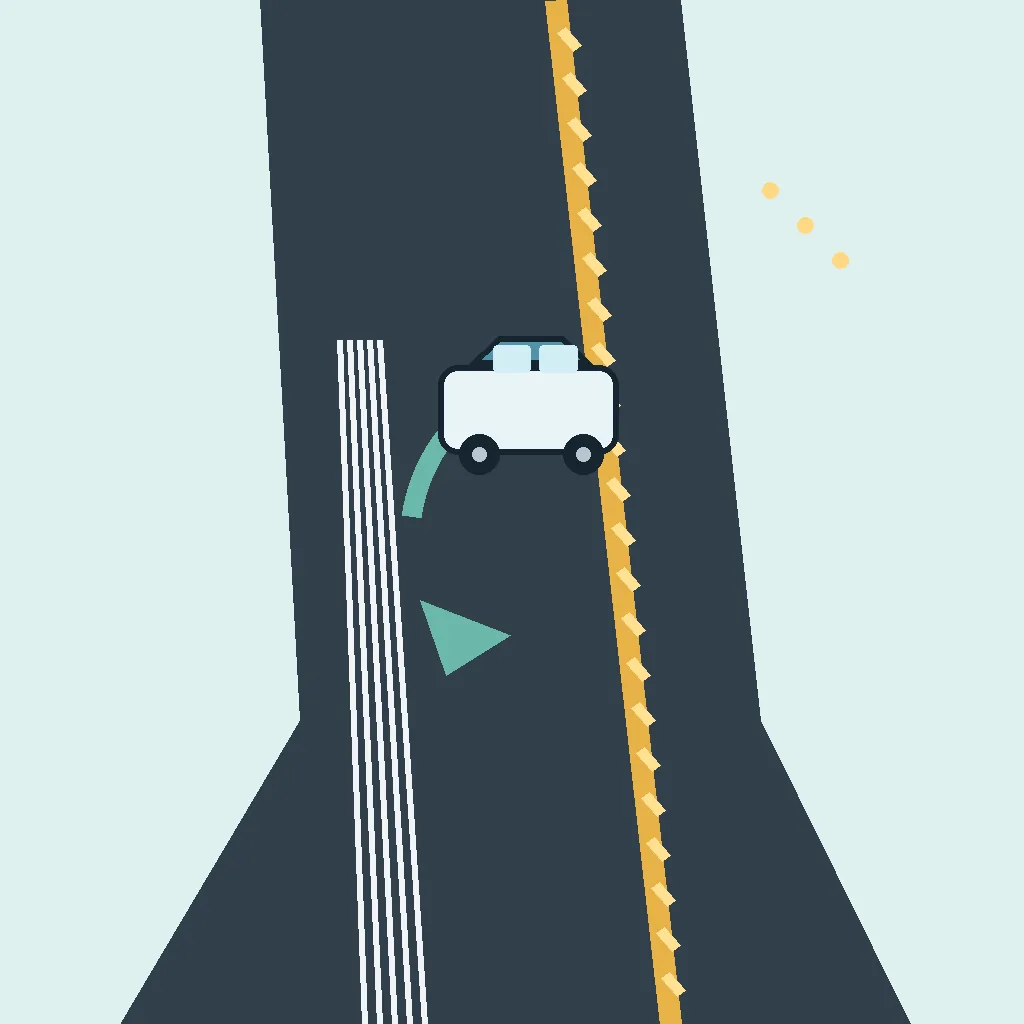
A centerline rumble strip is not automatically a no-passing command. Passing is controlled by the centerline marking, signs, sight distance, traffic, and state rules. If a legal pass requires crossing the strip, finish the maneuver with a clear view and predictable steering. Never cross simply because a slow vehicle is frustrating you, and do not let the rumble push you toward oncoming traffic.
Braking or turning on the texture
If a curve or hazard requires speed reduction, begin scanning and adjusting before the strip when possible. Keep the motorcycle upright and settled as conditions allow. A strip can make a brake or steering input feel sharper, so leave more space and avoid copying a car's last-second movement.
Temporary transverse strips
Work zones may place repeated transverse strips before a flagger, lane shift, detour, or temporary signal. Read the warning signs, cones, workers, and speed instruction together. The surface alone does not tell you whether to stop, merge, or slow. Maryland's work-zone guidance warns that temporary rumble strips should be used with other traffic-control devices and evaluated carefully where motorcycle traffic is high.
Debris, rain, or a blocked shoulder
The shoulder is not automatically a safe escape route. Gravel, standing water, a broken edge, parked vehicles, or a cyclist can make a quick return dangerous. If the shoulder is compromised, hold a stable line, create space, and follow the safest legal path indicated by the roadway and signs.
Design, Accommodation, and Limits
Rumble strips are installed to address specific crash patterns and roadway contexts. FHWA's design material discusses shoulder, edge-line, centerline, and transverse types, plus dimensions, spacing, facility type, and patterns. Those choices balance the warning inside the vehicle with pavement life, exterior noise, drainage, bicycles, motorcycles, and nearby residents.
Source boundary
The Federal Highway Administration's all-road-user guidance says design and placement can be adjusted for different users and notes that riders should be aware of centerline rumble strips. It does not create one nationwide motorcycle crossing rule.
This article is educational study content, not a motorcycle training lesson, engineering specification, or legal opinion. Follow the current state handbook, work-zone directions, and qualified instruction when they provide more specific guidance.
A well-designed strip is a backup warning, not permission to ride while tired or distracted. It cannot replace a safe following distance, lane scanning, protective gear, or a plan for the road ahead. If repeated vibration appears where you do not expect it, slow the decision-making process, look for the sign or marking that explains the feature, and use a safe place to stop only when the roadway allows it.
FAQ: Rumble Strips and Motorcycles
Bottom Line
Rumble strips give motorcycle riders useful information, but the vibration is only the first step. Identify the placement, look for the cause of the drift or transition, keep the motorcycle balanced, and choose a legal path with room for other road users. Practice the same scan-and-correct sequence in your written-test review, then confirm local wording in the current handbook or a qualified riding course.
Updated November 15, 2026. This independent guide is for study and general safety awareness; official state handbooks, signs, markings, and work-zone instructions control.