DMV Driving Test Appointment: How to Schedule Your Road Test
A DMV driving test appointment is the booking used for your behind-the-wheel road test. The appointment may be called a road test, driving test, drive test, behind-the-wheel test, or road skills test depending on your state agency and location.
Before you choose a time, confirm that you are booking the road test rather than a written permit test. Then check your eligibility, required vehicle, insurance and registration documents, accompanying-driver rule, test fee, and arrival instructions. This guide explains the process without treating one state's checklist as a national rule.
Quick Answer
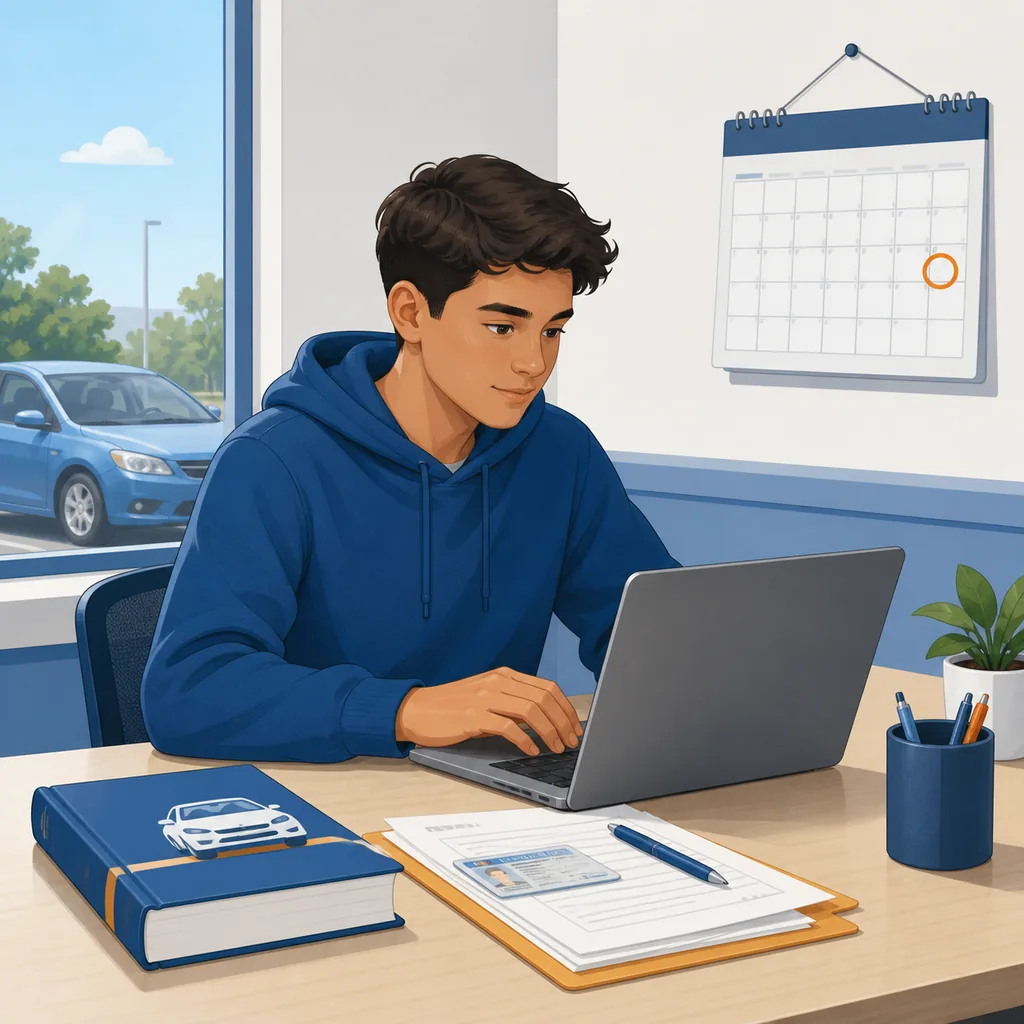
Start at your official state motor-vehicle agency website. Select the service for a road, driving, behind-the-wheel, or road-skills test; choose an office and time; save the confirmation; and verify the vehicle and documents before you go. DMV appointment rules are state- and office-specific, so the official booking page is the final authority.
DMV Driving Test Appointment vs. Permit Test Appointment
The two appointment searches are easy to mix up because both happen during the licensing process. A DMV permit test appointment normally concerns the written knowledge exam or learner-permit transaction. A DMV driving test appointment is for the practical road test in a vehicle.
| Appointment | Main task | What to prepare |
|---|---|---|
| Permit or written test | Rules-of-the-road and road-sign knowledge exam. | Identity documents, application, fee, and study preparation. |
| Driving or road test | Behind-the-wheel evaluation of vehicle control and safe driving. | Permit or license, qualified driver, compliant vehicle, and vehicle documents. |
| License issuance | Completes a license transaction after testing or eligibility review. | Agency-specific documents, payment, photo, and any passed-test record. |
If you still need the written exam, use the separate DMV permit test appointment guide. If you are preparing for the practical test itself, continue with this page and the site's DMV road test practice guide.
After the drive, use the new DMV road test results guide to understand how states deliver results, what a score sheet can show, and what to do if the result is delayed.
How to Schedule a DMV Driving Test Appointment
The labels and booking screens differ, but the decision process is usually similar. Use this sequence so you do not arrive with a written-test booking or a vehicle that the office cannot accept.
- Confirm that you are eligible for the road test. Check whether your state requires a learner permit, a completed knowledge test, driver education, supervised practice, or a minimum holding period before the behind-the-wheel test.
- Open the official agency appointment page. Depending on the state, the agency may be called DMV, DPS, BMV, RMV, MVD, MVC, or another licensing authority. Start from the official domain or the USA.gov state motor-vehicle directory.
- Choose the road-test service. Look for road test, driving test, drive test, behind-the-wheel test, or road skills test. Read the service description instead of relying on a short menu label.
- Select the office and date. Compare nearby locations when possible. A different office may have different test routes, vehicle rules, appointment inventory, or walk-in instructions.
- Review the confirmation before submitting. Check the applicant name, office address, date, time, service type, testing method, fee, cancellation policy, and any instructions about the vehicle or accompanying driver.
- Save the appointment details. Keep the email, confirmation number, QR code, or screenshot in an easy-to-find place. Recheck the official page before test day in case the office changes its instructions.
Common Road-Test Appointment Labels
Searchers often use “DMV driving test appointment,” “DMV road test appointment,” and “road test appointment” interchangeably. The following labels usually point toward the same practical-test intent, but always read the state-specific description.
| Booking label | Usually means | Do not assume |
|---|---|---|
| Road test | Behind-the-wheel driving evaluation. | That every office tests every vehicle class. |
| Driving test | Practical test for a learner or driver license. | That it is the same as a written knowledge test. |
| Drive test | Short wording for a road or behind-the-wheel test. | That a third-party driving-school appointment is accepted by the agency. |
| Road skills test | Practical vehicle-control and traffic-safety assessment. | That the same appointment covers license issuance or a separate written exam. |
| Driver license service | A broader transaction category that may include testing. | That every driver-license slot includes a road test. |
What to Confirm Before Booking
A good appointment search answers more than “is there an opening?” Confirm the items below while you are on the official agency page.
| Check | Why it matters | Where to verify |
|---|---|---|
| Permit or license status | Some agencies require a valid learner permit, completed written test, or other prerequisite before the road test. | Your state's learner-permit and road-test pages. |
| Vehicle class | Motorcycle, passenger vehicle, commercial, and specialty tests may use different services and equipment. | The test-service description and vehicle requirements. |
| Vehicle documents | Registration, insurance, plates, inspection, or rental paperwork may be checked before the test. | The official road-test checklist for that state and office. |
| Accompanying driver | A permit holder may need a qualified licensed driver to arrive and remain with the vehicle. | Permit restrictions and road-test instructions. |
| Cancellation and retest rules | Missing a slot or arriving with a rejected vehicle can affect fees, wait times, or the next available date. | Appointment confirmation and official testing policy. |
What to Bring to a DMV Driving Test Appointment
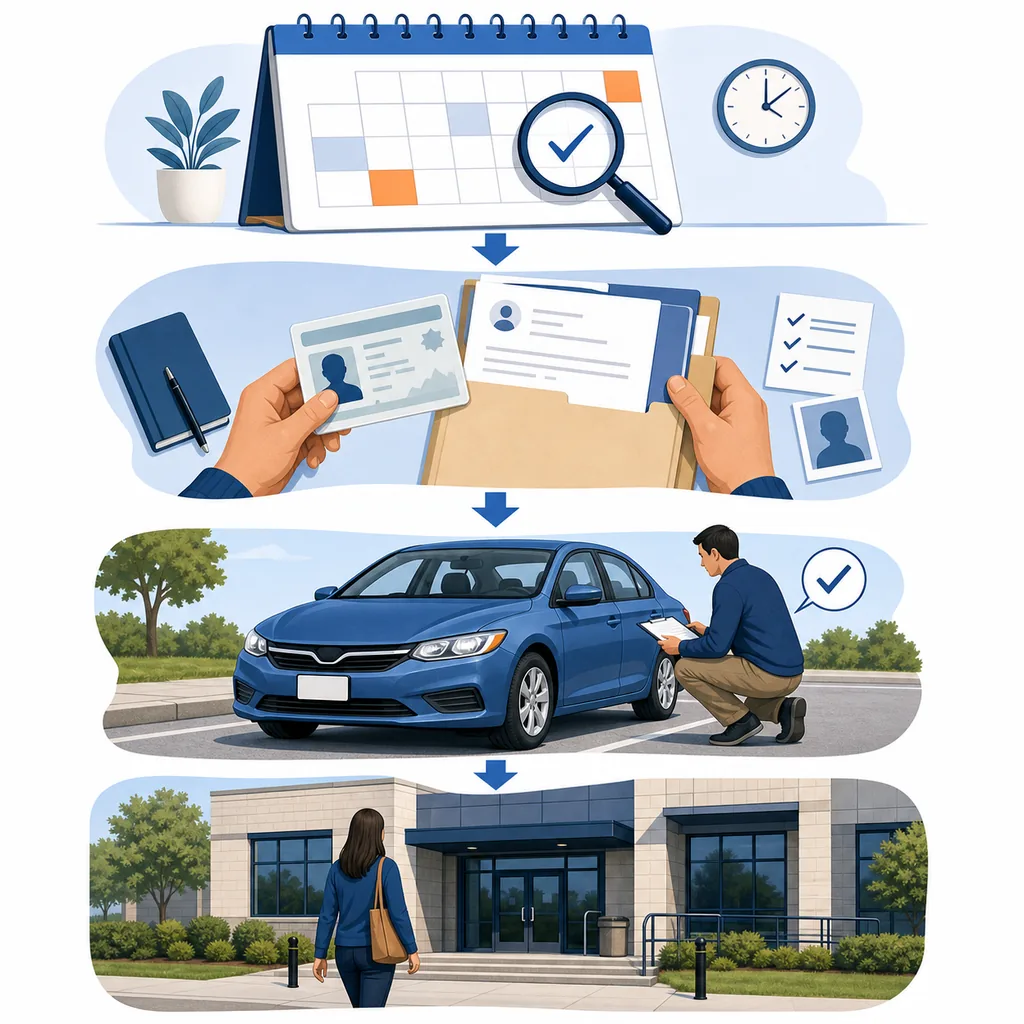
There is no single national road-test checklist. Use the list below as a preparation framework, then compare every item with the official instructions for your state and testing location.
- Your learner permit, license, or other required identification: Bring the exact document named by the agency and check whether it must be valid on the test date.
- Appointment confirmation: Keep the confirmation number, email, or QR code available in case the office needs to verify the service.
- A qualified accompanying driver: A permit holder may not be allowed to drive to the office alone. Confirm the age, license, and supervision requirements.
- A compliant vehicle: Check lights, brake lights, turn signals, tires, mirrors, seat belts, horn, doors, and other safety equipment before leaving home.
- Registration and insurance evidence: The test vehicle may need current registration, plates, insurance, inspection, or a rental agreement that permits testing.
- Corrective lenses: If your permit or license requires glasses or contacts, bring them and use them for the vision and driving portions as instructed.
- Payment or test receipt: Some agencies collect fees during the appointment, while others require payment or an application step earlier.
Do Not Treat a Generic Checklist as a Guarantee
A vehicle that is acceptable in one state or office may fail another state's paperwork or equipment check. If the official page and this guide differ, follow the official state and office instructions.
State Examples: Why Road-Test Rules Differ
These official pages show why a national guide should explain the process rather than promise one universal checklist. Use the links as starting points, not as substitutes for your own state's current appointment confirmation.
| State example | What to verify | Official page |
|---|---|---|
| California | Appointment service, behind-the-wheel test eligibility, and vehicle/driver requirements. | California DMV appointments and California behind-the-wheel test |
| Texas | Driver-license appointment path, testing prerequisites, and the current road-test instructions. | Texas DPS appointments |
| New York | Road-test scheduling, location selection, and rescheduling or cancellation instructions. | New York DMV road test |
| Virginia | Road-skills test eligibility and whether the selected location uses appointments, walk-ins, or both. | Virginia DMV road skills test |
What If No DMV Driving Test Appointments Are Available?
Road-test calendars can fill quickly, especially around school breaks and holidays. If the first office has no availability, use a methodical search instead of choosing a different service just to get an earlier date.
- Check nearby official offices. Different offices can have different route capacity and appointment inventory.
- Look for official cancellation openings. Use the agency's own scheduler and follow its rules for changing or refreshing a booking.
- Check whether your agency publishes walk-in rules. A walk-in policy may apply only to certain offices, test types, or time windows.
- Call the agency when the online instructions are unclear. Ask which service name covers a first-time road test and whether a passed written test is already on your record.
- Avoid unofficial appointment resellers. Do not pay a third party or share personal information just because it promises a faster slot.
Prepare After You Book the Road Test
Once the date is saved, use the remaining time to make the test routine rather than learning a new maneuver on test morning. The site's DMV driving test practice guide covers evaluation areas and common mistakes; use this short appointment-focused plan alongside it.
- Run a vehicle check: Practice with the same car you expect to use and fix safety or document problems early.
- Practice the high-risk moments: Smooth stops, lane changes, turns, backing, parking, signaling, mirror checks, and observation should be consistent.
- Do a dry run: Drive to the office, confirm parking and arrival time, and rehearse where your accompanying driver will wait.
- Review state-specific rules: Use the state-specific DMV guide to find the right agency and handbook for your location.
- Check documents 48 hours before: Compare the appointment confirmation, permit, registration, insurance, and vehicle condition against the official checklist.
Official Sources to Check
Start with the USA.gov state motor vehicle directory if you are unsure which agency manages licensing in your state. For state-specific road-test details, check the current California DMV behind-the-wheel test page, Texas DPS appointment page, New York DMV road-test page, or Virginia DMV road-skills page as applicable. Rules, fees, test locations, and vehicle requirements can change, so verify again before the appointment.
FAQ
Bottom Line
A successful DMV driving test appointment plan has three parts: choose the correct road-test service, arrive with a compliant vehicle and the required documents, and practice the behind-the-wheel skills your state evaluates. The appointment calendar gives you a date; the official checklist and steady practice are what make the date useful.