Class C License Test Guide: Written, Permit & Driving Test Explained
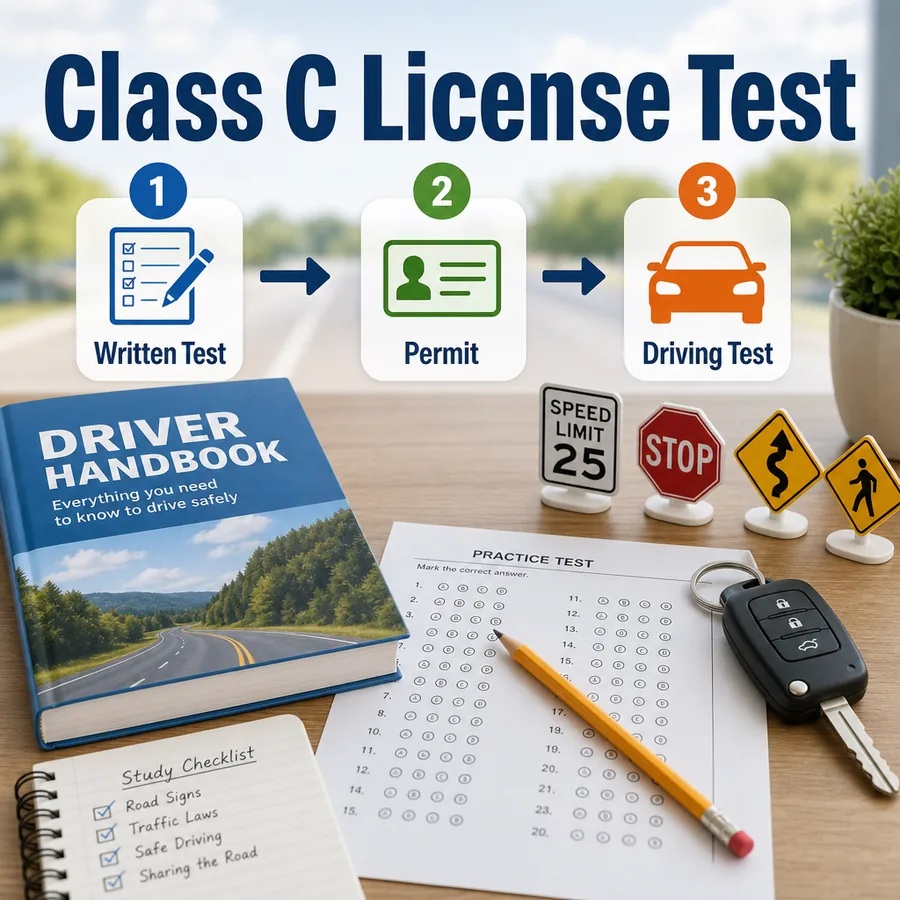
The Class C license test is the testing process most people complete to get a standard non-commercial driver license for passenger vehicles. In many states, that process includes a Class C written test or knowledge test first, then permit requirements, and finally a Class C driving test or road test.
If you searched for driver license Class C test, Class C permit test, or Class C knowledge test, the confusing part is usually terminology. Different DMV agencies use different labels for similar steps. This guide explains what each term means, how they connect, and which study resource to use at each stage.
Quick Answer: What Is the Class C License Test?
A Class C license test usually refers to the exams required for a regular passenger vehicle license. The exact process varies by state, but the common path is simple: pass a vision screening, pass a written or computer-based knowledge test, receive or use an instruction permit if required, complete supervised driving practice, then pass a road test.
For most learners, the most important first step is the knowledge exam. This is where a Class C practice test helps, because it checks whether you understand road signs, right-of-way, speed rules, lane use, parking, alcohol laws, and safe driving judgment before you schedule the real exam.
Official agencies use similar categories even when the wording changes. Oregon DMV, for example, says an original Class C non-commercial driving privilege can involve a vision test, knowledge test, and drive test, while California DMV publishes official Sample Class C Written Test 1 and other sample knowledge tests for practice.
Best Starting Point
If you are not sure which test you need, start by studying for the Class C written test. It overlaps with the permit test and gives you the rule foundation needed for the driving test.
Class C Written Test vs Permit Test vs Driving Test
The terms sound interchangeable, but they describe different parts of the licensing path. Use this table to match your search intent to the right study action.
| Test Name | What It Checks | When You Take It | Best Preparation |
|---|---|---|---|
| Class C written test | Traffic laws, signs, safe driving, and state rules | Before a permit or license approval, depending on state rules | Driver handbook, sample questions, and written test review |
| Class C knowledge test | The same rule knowledge, often on a computer | Usually before receiving a learner permit or license | Mixed practice questions with answer explanations |
| Class C permit test | Knowledge needed before supervised driving | Before an instruction permit, especially for first-time drivers | Permit rules, signs, right-of-way, and GDL restrictions |
| Class C driving test | Vehicle control, observation, turns, lane changes, parking, and safety | After meeting permit and practice requirements | Behind-the-wheel practice and road test checklist review |
Who Needs a Class C License Test?
Most people who want to drive a regular passenger car, small SUV, pickup, or van for personal use need some version of a Class C license test. This is different from commercial license testing, motorcycle testing, or special endorsement testing.
You may need the test if you are a first-time driver, a teen applying for a learner permit, a new resident transferring a license, an adult who never held a license, or a driver whose previous license expired long enough to require retesting. State rules differ, so the official driver handbook or DMV appointment page should always be your final authority.
What Is on the Class C Written or Knowledge Test?
The Class C knowledge test focuses on whether you can make safe and legal decisions before you drive independently. Most states test the same core categories, even if the number of questions and passing score differ.
Road Signs and Traffic Signals
Expect questions about sign shapes, colors, warning signs, regulatory signs, traffic lights, lane control signals, and pavement markings. A common mistake is memorizing a sign name without understanding the required action. For deeper visual review, use our traffic signs and road rules guide.
Right-of-Way and Intersections
Right-of-way questions measure sequence and risk judgment. You may see four-way stops, uncontrolled intersections, left turns, pedestrians, emergency vehicles, bicycles, and school buses. The safest answer is often the one that prevents conflict, not the one that gets you through fastest.
Speed, Space, and Lane Use
Many learners miss questions because they treat the speed limit as the target speed. The written test often asks when to slow down for rain, fog, curves, work zones, school zones, heavy traffic, or limited visibility. Lane questions may cover passing, merging, turn lanes, bike lanes, and safe following distance.
Alcohol, Distractions, and Penalties
State handbooks usually include impaired driving limits, open container rules, implied consent, cell phone restrictions, and penalties for dangerous behavior. These questions are fact-heavy, so verify current details in your state handbook before test day.
What Is on the Class C Permit Test?
A Class C permit test is usually the knowledge exam used before a learner receives permission to practice driving under supervision. For teens, it may also connect to graduated driver licensing rules, parent or guardian requirements, driver education, passenger restrictions, nighttime limits, and minimum practice hours.
If your search goal is “I need my first permit,” use the DMV permit practice test first. It emphasizes first-time driver rules and permit-specific restrictions. If your goal is a broader driver license exam, use the Class C practice test after you understand permit basics.
What Is on the Class C Driving Test?
The Class C driving test, also called a road test or behind-the-wheel test, checks whether you can operate the vehicle safely in real traffic. The examiner is usually watching for observation, control, legal stops, smooth turns, lane changes, speed choice, parking, backing, and response to signs or signals.
This test is not about memorizing answers. It is about repeatable safe habits. A learner who knows every written rule can still fail the driving test by rolling through stops, forgetting mirror checks, turning too wide, driving too fast for conditions, or failing to yield. Use our DMV driving test practice guide when you are ready for behind-the-wheel preparation.
How Many Questions Are on the Class C Test?
There is no single national number for the Class C license test. Some states use around 30 to 40 knowledge questions, while others use shorter or longer formats. Passing scores also vary. For example, one state may require 80%, while another may require a different cutoff or separate sign-test score.
For a concrete example, Oregon DMV's Class C Knowledge Test section says the test has 35 multiple-choice questions and requires 28 correct answers to pass. That number is useful as an example, not a national rule.
Because the number changes by state and applicant type, the safest study target is not a fixed count. Start with our DMV written test question count guide to understand common state formats. Then answer at least 150 to 250 mixed questions across signs, laws, right-of-way, parking, and defensive driving, and score 85% or better on a timed 40 question DMV practice test.
A Practical Study Path for the Driver License Class C Test
The best preparation sequence depends on where you are in the licensing process. The plan below works for most learners because it moves from official rules to mixed testing, then to road skills.
- Read your official driver handbook first. Focus on signs, right-of-way, speed, lane use, parking, alcohol rules, and state-specific restrictions.
- Take a sample written test. Use official-style questions to identify weak categories before taking full-length tests.
- Review every missed answer by topic. Do not just memorize the letter. Write down the rule that made the correct answer right.
- Take a full Class C practice test. This checks whether you can handle mixed topics under test-like conditions.
- Use a 40-question test for final readiness. Longer tests reveal fatigue, timing problems, and repeated weak spots.
- Practice driving skills separately. After the written or permit stage, prepare for the road test with supervised driving and a checklist.
Which Page Should You Use Next?
Use the page that matches your immediate task. This keeps the new Class C license test guide from competing with more specific practice pages and helps you move through the right sequence.
| Your Goal | Best Next Resource | Why |
|---|---|---|
| I want to take a full Class C quiz | Class C Practice Test | Best match for practice-test intent and mixed Class C questions |
| I want official-style sample written questions | Sample Class C Written Test Guide | Best for numbered sample tests and answer review strategy |
| I need a first-time learner permit | DMV Permit Practice Test | Best for permit rules, teen drivers, and supervised driving restrictions |
| I want final exam-length practice | DMV Practice Test 40 Questions | Best for timed mixed review before scheduling |
| I already passed the written test | Driving Test Practice Guide | Best for road skills, examiner expectations, and test-day mistakes |
State Differences to Watch Before Scheduling
The phrase Class C driver's license test does not mean every state uses the same rules. Some states call the written exam a knowledge test. Some separate permit testing from license testing. Some require appointments, online pre-application, driver education certificates, or a minimum holding period before the road test.
For California-specific preparation, use our California DMV Class C practice test guide and confirm details with the official California Driver's Handbook. For other states, start with your DMV, BMV, MVD, or licensing agency handbook and then use our state-specific DMV practice tests guide to compare requirements.
If you are already past the written test stage, check your state's drive test scheduling rules. Oregon, for example, notes that Class C non-commercial drive tests may be completed through DMV or approved Class C testing businesses after the knowledge and vision steps.
Common Mistakes That Cause Class C Test Failures
- Studying only practice answers: You need the rule behind each answer because real wording can change.
- Ignoring permit restrictions: First-time drivers may face rules that experienced drivers forget, such as supervision or passenger limits.
- Skipping signs and markings: Sign shape, color, and lane markings are frequent written test topics.
- Waiting too long to practice driving skills: The road test requires habits built over time, not one last-minute review.
- Assuming all states are identical: Always verify local question counts, passing scores, documents, and appointment rules.
FAQ: Class C License Test
Final Recommendation
Use this guide as the map, then choose the practice page that matches your next step. If you still need the written or knowledge test, begin with handbook review and a Class C practice test. If you are preparing for a learner permit, use permit-specific practice. If you already passed the knowledge exam, shift your attention to road test skills.
The best sign that you are ready is not one lucky passing score. It is consistent performance across mixed questions, clear explanations for missed answers, and enough behind-the-wheel practice to follow the same rules safely in real traffic.
About This Guide
This guide was prepared by the DMV Practice Test 2025 editorial team to clarify common Class C test terms and help learners choose the right preparation path. Always confirm current requirements with your official state driver handbook or licensing agency because local rules and testing procedures can change.